

We Are All Pilgrims
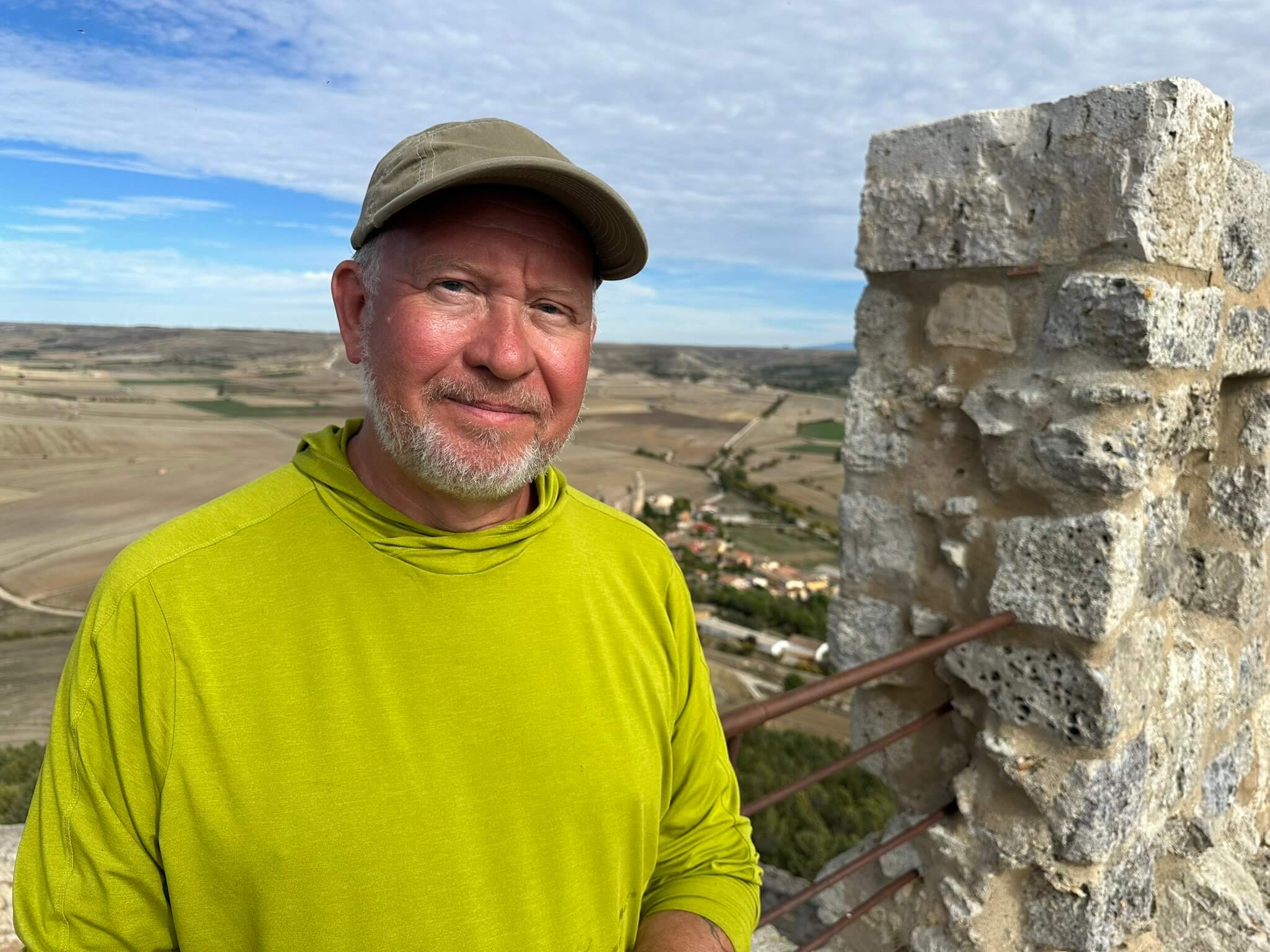
There is something unique that greets me each time I walk into my room at the end of
the day. It is a small, plastic plaque placed in the center of my prayer space. On the
plaque, one can clearly read KM 6202.
At first glance, this looks like the type of thing you might find on an office desk,
indicating who is sitting behind the desk or the role they play. But my plaque marks a
distance. My front door is 6,202 kilometers from the Cathedral of Saint James the
Greater in Santiago de Compostella, Spain. The remains of Saint James, the first
apostle to be martyred, are believed to be located there.
For over 1,200 years, pilgrims have walked along the Camino de Santiago, the Way of
Saint James, in order to visit the cathedral. These pilgrims come from all over the world.
Along the Camino, they will encounter mileage markers similar to the one I have in my
room, telling them how close they are to completing their pilgrimage. While every
marker varies in shape, size, or design, they all proclaim the same quiet truth.
You are still on the way.
The Camino de Santiago is extremely popular these days. In 2025, it is estimated that
500,000 people received their certificate of completion for walking the walk. A pilgrim
only needs to complete 100 kilometers by foot to receive their Compostela or
completion certificate. That said, the most famous route, the French Way, begins at the
base of the Pyrenees in France and extends 800 kilometers or 500 miles to the
endpoint.
My life has been blessed with four experiences along the Way of Saint James, including
two complete pilgrimages along the French Way. Like others, when I meet another
pilgrim, I can share stories that come easily, such as memories of long mornings,
unexpected friendships, torrential rain, blisters, and a warm meal just at the right time.
That said, when someone who has not walked the Camino asks me about it, I can also
tap into the feeling I get when I look at my plaque. We are all still on the way because
we are all pilgrims in one way or another.
The word, pilgrim or peregrino in Spanish, has roots in the Latin word for stranger. The
image of the pilgrim is of one who is passing through, going from one place to another.
A pilgrim depends upon the welcome of those whose lands we walk through. On the
Camino, it is rare to stay in one spot for more than a single evening. Everything has to
be packed up and taken away as the journey continues in the morning.
The earliest written account of the Camino Frances or French Way dates back to a book
called the Codex Calixtinus from around 1100 C.E. It functioned as a kind of travelogue
in the medieval world as more and more pilgrims began feeling called to the Way. The Codex
describes the Camino has having three distinct sections or experiences. The first,
beginning in Saint Jean Pied de Port, France, to Burgos, Spain, tests the pilgrim’s
physical stamina. Trust me, walking over the Pyrenees is no easy matter. But it is
doable, and you begin to feel in your body the impact of the mission you are on to reach
the tomb of Saint James. There is a humility in realizing that your body sets its own
terms. Each step becomes an act of the will, each hill a small surrender.
Prayer, in those moments, was incredibly simple: just keep going.
The second section, from Burgos to Leon, is called the meseta, and it tests your inner
mind. This 135-mile stretch is flat, like the flattest regions of Kansas. Each day looks,
feels, and sounds the same as the day before. Many pilgrims skip this part because
they find it boring or monotonous. Others spend the day listening to podcasts [like the
God Minute!] or their favorite music. Still others, like me, walked the meseta in silence,
allowing my inner thoughts, prayer, and solitude to sink in. The rosary was very helpful
to me during this section.
The meseta tests one’s thoughts. Why am I here? How much farther? Does this even
really matter? What if I can’t finish? Eventually, the questions fade, and the subtleties of
the rough, undramatic landscape begin to sink in.
Finally, the third trek through beyond Leon is stunningly beautiful, green, and verdant.
This last section runs through Galicia, the region known as the Ireland of Spain for its
beauty. If the first section of the Camino humbles the body and the second section
quiets the mind, the third opens the heart to new depths. The beauty of the majestic
Galician hills, forests, villages, and churches did not overwhelm me. It invited me to
something more.
I became deeply aware of gratitude in a new way, not as a concept but as a response.
After weeks along the Camino, I realized that I was not accomplishing anything and I
was not conquering the path. I was discovering the gift of the journey. By the time I
reached Santiago and stood in front of the ancient cathedral, I understood something
that I had completely not expected; the end of the Camino is not its conclusion. It is just
the beginning.
Interestingly enough, over the main door that pilgrims use to enter the cathedral, there
is a very old carving above the door. There are the traditional Greek letters, Alpha and
Omega, representing the words of Jesus from the Revelation of John: I am the Alpha
and the Omega, the beginning and the end. But the carving inverts the letters to Omega
– Alpha. The end is just the beginning.
And this is why that small plaque remains centered in my prayer space. KM 6202 is not
simply a measure of distance. It is a reminder that I am still on the way. My pilgrimage
did not end at the tomb of Saint James or even on the beach in Finisterre, the true
conclusion of the physical Camino. My pilgrimage continues in ordinary days, in familiar
rooms, and the oftentimes unnoticed paths of my daily life.
There is an old expression, “The Camino calls.” In other words, like any vocation, it is
there for those who discover it or are drawn to embrace an ancient pilgrimage. That
said, no one needs the Camino and no one has to trek 100 kilometers or 800 kilometers
to experience the grace of gratitude. The pilgrimage that each of us calls life starts with
a single step, taken with intention and with attention to how God moves us from place
to place.
And perhaps this is the greatest gift; not the memory of an ancient road in a place far,
far away, but the quiet conviction that, wherever we are, we have not arrived. We are on the way.
Mary Ellyn & Fr. Chris, how beautiful both of your reflections are! To invite Jesus in, to know Him, to walk with Him literally & figuratively. Sooo love the Omega & Alpha connection. As i/we share more years on Mother Earth, i cherish all the underscorings of all of you to remind me that the end (of life as we know it) truly is the beginning of Eternal Life….as long as we find God along the journey. Yes, we are Companions on the Journey 👣🕊️🕯️🙏
Ever since seeing the Martin Sheen movie "THE WAY", I have this desire to follow the "steps" you described in blog, but without having to hike overseas. I loved seeing the path everyone takes in the movie. Thanks for sharing.
Ahhhh beautiful! Thank you for sharing the truth and gift of the Camino. I have never walked that journey but I greet you with “hello” for we are at the “beginning” as you say. Most grateful for the wonderful read.