

The Meaning of Lent: A Catholic Reflection on Rest, Healing, and Spiritual Renewal
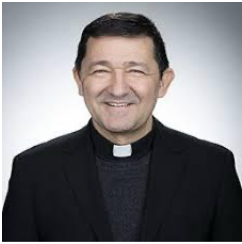
- Fr. Guillermo Campuzano, C.M.
- Feb 12
- 5 min read

Our world is tired. Not only fatigued by the passing of time, but wounded by the way time has been lived. There is a weariness that runs deeper than physical exhaustion—a fatigue of meaning, of hope, of breath itself. We see it in the anxious pace of societies that never stop, in ecosystems pushed beyond their limits, in human hearts stretched thin by expectations, fear, and relentless productivity. We see it in the earth, groaning under the weight of exploitation, and in people who carry invisible burdens, often in silence and isolation.
This tiredness is not accidental. It is the result of a way of inhabiting the world that consumes more than it cares for, that accelerates rather than listens, that values efficiency over tenderness. Life itself—human life, animal life, the fragile balance of creation—shows signs of exhaustion. Species disappear. Forests burn. Oceans warm. Communities fracture. Individuals struggle to remember who they are beyond what they produce or achieve. We live in a wounded world, and we ourselves are wounded within it.
Into this reality, Lent comes not as an additional demand, but as a sacred pause. It is a divinely given interruption, a space carved out in time where God gently but firmly asks us to stop, to look, to listen, and to choose again. Lent is not first about renunciation; it is about restoration and healing. It is not about punishment, but about truth. It invites us to face our tiredness honestly and to receive it as a place of encounter with God.
At the heart of Lent lies an ethical call rooted in Scripture: a summons to become carers of life. This vocation begins not “out there,” but within. The first life entrusted to us is our own.
Why Rest and Restoration Matter in Lent
In a world that equates worth with usefulness, caring for one’s own life can feel almost transgressive. Yet the Christian tradition insists that our life is not an accessory to our mission—it is the first gift and the first responsibility. Before we are workers, leaders, parents, or servants, we are living beings, created in the image of God, breathed into existence by divine love.
To care for oneself is not selfishness; it is reverence, it is an ethical decision. It is recognizing that our body, our mind, our emotions, and our spiritual depth are not expendable resources. Lent invites us to ask uncomfortable but necessary questions: How am I living? What rhythms govern my days? What personal or relational wounds remain unattended? What fatigue have I normalized?
The Gospel speaks directly to this condition. Jesus says: “Come to me, all you who are weary and burdened, and I will give you rest” (Mt 11:28). This is not a poetic metaphor; it is a concrete promise. Rest, in the biblical sense, is not escape but restoration—the reordering of life according to God’s wisdom. Lent offers this rest not by numbing our exhaustion, but by illuminating it and placing it in the hands of Christ.
Self-care, then, becomes an ethical act. To rest, to pray, to fast wisely, to name our limits, to seek healing—these are ways of honoring the gift of life entrusted to us. A tired Christian who never stops risks becoming a functional contradiction: proclaiming a God of life while living as if life were disposable.
From Self-Care to Mutual Care
Yet Lent never leaves us alone with ourselves. The pause it creates opens our eyes to others. As we reconnect with our own fragility, we become more capable of recognizing the fragility of those around us. Families, communities, parishes, and religious institutions today are also tired. Many carry unresolved conflicts, unspoken griefs, generational wounds, and the quiet fatigue of “keeping things going.”

Mutual care is not optional; it is constitutive of Christian life. The call to “love your neighbor as yourself” presupposes that both lives matter. Lent invites communities to ask: How do we care for one another’s limits? Do our structures sustain life—or drain it? Is there space for rest, listening, and compassion?
Practices such as reconciliation, shared prayer, simple living, and attentive presence are not secondary spiritual exercises; they are acts of resistance against a culture of exhaustion. When communities learn to slow down together, to forgive, to share burdens, they become signs of the Kingdom—a Kingdom where no one is left alone in their tiredness.
Social Care: Letting the World Rest
The movement of Lent does not stop at the personal or communal level. It pushes us outward, toward the wounded body of the world. A tired planet cannot be healed by tired people repeating destructive patterns. Lent calls Christians to contribute actively to social care, to participate in the healing of structures, systems, and relationships that produce exhaustion and exclusion.
To help the world rest means questioning economic models that exploit both people and nature. It means defending the dignity of workers, migrants, the poor, and all those pushed to the margins. It means ecological conversion—recognizing that the cry of the earth and the cry of the poor are one (Laudato Si). In this sense, fasting takes on a new depth: it becomes a refusal to overconsume, to dominate, to live as if resources were infinite.
Lent is a time to see clearly, to reflect deeply, and to decide courageously to live, and to act differently. It asks us not only to denounce injustice, but to embody alternatives. Christians are called to be prophetic—not by shouting louder, but by living differently.
Living Prophetically Through Relationships

Prophecy today is relational. The new ascetism is relational in its essence. It is expressed in the way we relate to ourselves, to others, to creation, and to social structures. Jesus himself modeled this prophecy by
drawing near to the most tired: the sick, the poor, the excluded, the sinners weighed down by shame. He did not demand that they first become strong; he offered them rest.
When we create spaces of hospitality, advocate for the vulnerable, and design communities that prioritize life over profit, we continue this Gospel logic. We become prophets who announce, through concrete gestures, that another way of living is possible.
Lent as Gift: The Sacred Pause That Lets Life Breathe Again
Lent is not a burden added to an already exhausted world. It is a gift—a sacred pause offered by God so that life may breathe again. It teaches us that rest is holy, care is ethical, and vulnerability is not failure but truth.
In choosing to care for life—beginning with our own, extending to our communities, and embracing the whole of creation—we respond to Christ’s invitation. We come to him with our tiredness, and we learn from him how to make the world a place where life can rest, heal, and flourish again.
Father Guillermo Campuzano, C.M.
A Vincentian Missionary and member of the Western Province of the Congregation of the Mission in the United States. He was ordained a priest for the service of the poor on December 8, 1993. Over his 32 years of ministry, he has held numerous leadership and formation roles in priestly formation, consecrated life, and lay ministry. He was recently appointed to the International Office of the Vincentian Family, where he serves the Global South. Father Guillermo worked at the United Nations for five years and served as Vice President of DePaul University in Chicago until January 2024.
Father, every word or phrase you write is packed with profound meaning. May the Holy Spirit continue to nourish you to proclaim HIS message to our wounded world. As a Daughter of Charity speaking to you, I am grateful to share the same Vincentian vocation with. Sr. Andrea Miller, D.C.