

Our Journey Through the Church's Longest Season
Updated: Jan 10

What is your favorite liturgical season?
Most Catholics answer “Advent” or “Lent.” Why these? I think it has something to do with the compactness of each (4 weeks and about 7 weeks, respectively) and the clarity of each season’s message. For Advent, it is “prepare” and for Lent, “change, be converted”. Both have many subthemes that are explored in the scriptures. Still, for each of these two, there is a focus that helps us understand better, pray more clearly, and be more focused in our times of reflection.
In stark contrast is Ordinary Time, which is sprawling rather than compact. Over its 34 weeks, which are interrupted often by other seasons, feasts, and solemnities, each of us is invited to renew and recommit ourselves to being a disciple of Jesus, being formed each year anew in the Christian life, and as members of the People of God.
The Church’s calendar, its liturgical year, is frequently, and I think best, viewed in a circular format with each season marked by a different color to distinguish it from its neighbor. This makes it easy to identify Christmas, Easter, etc. Ordinary time, however, is a bit more complicated since it has many interruptions, some lasting only a day.
Note: What we call “Ordinary Time” also could be called, and some would say should be called, “Ordinal Time” since we count these weeks in numerical order.
Today, January 11, 2026 we celebrate the Baptism of the Lord. This is counted as the first Sunday of Ordinary Time. This year, we hear Matthew’s account of this event. Ordinary time always begins with Jesus’ baptism. It is a most fitting place to begin our annual journey with Jesus through his earthly ministry since it is the foundational sacrament of our personal ministry, which is the expression of our discipleship. God has called each of us uniquely and given us different gifts. These all flow from the foundational sacrament, baptism. Touching it, being reminded of it, at the start of every annual journey through ordinary time calls us back to our beginnings as disciples of Jesus. How will we grow this year in our discipleship? How will our ministry change, develop, and mature in 2026? This is the opportunity ordinary time gives us.
The Gospel for the following Sunday, January 18, has us back at the scene of Jesus’ Baptism. It focuses, however, on John the Baptist proclaiming his experience as it is recorded in the Gospel of St. John. We will hear “Behold the Lamb of God!” How will we respond to this foundational truth about Jesus?

Ordinary Time continues on January 25, when we will hear Matthew’s account of the very early days of Jesus’ ministry of preaching (“Repent for the kingdom of heaven is at hand”) and the call of the first of those who will become his apostles. Ahh, the call! When did you first hear it? Have there been follow-up calls? Is your journey a fairly straight line or does it, like mine, resemble a tangle of spaghetti? This is a great Sunday to reflect, journal, and share about your experience of being called. (Hint: you have been called, even if you don’t believe me!)
January ends, and February begins, marking the 4th Sunday of Ordinary Time. Through Matthew’s presentation of the beatitudes, we begin to sense that there are rewards and costs that come with being a disciple. What an important lesson to learn! Yes, count those blessings (rewards) while also being aware of the costs because this discipleship isn’t easy. We must make choices to be peacemakers, to show mercy, etc. Perhaps this year, we will get better at seeing when someone else is paying the price of discipleship and encourage him or her on the journey.
The 5th Sunday arrives on February 8. Most people I know are weary of winter at this point. Enter Jesus’ call to be salt and light! Think of all the ways we use salt! “Use” is the right verb too, since, when used to flavor food, clean something, preserve meats, etc., it disappears. Jesus uses this humble, everyday element to call us to renewal and action. There is a world of suffering out there that is longing for care, attention. But, to provide that, we must first see it. Only then can we be the eyes, hands, and feet of Jesus. Only when we see, thanks to the light, can we ask, “What must be done here, now? In responding to the need, we give glory to our heavenly Father.
Warning: Ordinary Time is about to be interrupted! February 15 is the last Sunday of Ordinary Time until... well, I’ll get to that in a moment. In the Gospel on this 6th Sunday of the year, Jesus is on fire! He is calling his followers (that’s us!) beyond merely knowing the commandments to living them in their fullness—and teaching others to do the same. Our righteousness is to surpass that of the Scribes and Pharisees. It is not enough for us not to kill. No! We must not even get angry at someone else lest we be “liable to judgment.” Oh my. This discipleship thing is demanding. (Think so? Just wait!)
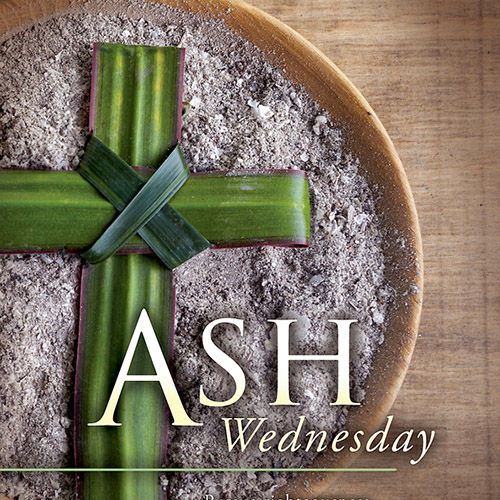
On Wednesday, February 18, we will admit our need for conversion and healing, remembering that “we are dust and unto dust we shall return” as ashes are spread in the shape of the cross on our foreheads as we enter Lent again. Technically, Lent doesn’t begin until Sunday, February 21, but for those of us who aren’t liturgists, Lent begins on Ash Wednesday.
We won’t be back in Ordinary time until May 31. Our growth as disciples will, of course, continue through Lent and Easter. But the simple pattern that Ordinary Time provides is traded for a different one during these two seasons. May our journey be made richer and our faith deepen through our deliberate efforts to become more and more like Jesus, whose disciples we are.
May your journey be blessed with grace and light.
Fr. Mark Pranaitis, C.M.
Comments